Having access to a pharmacy and having access to the pharmacy you rely on are not necessarily the same thing.
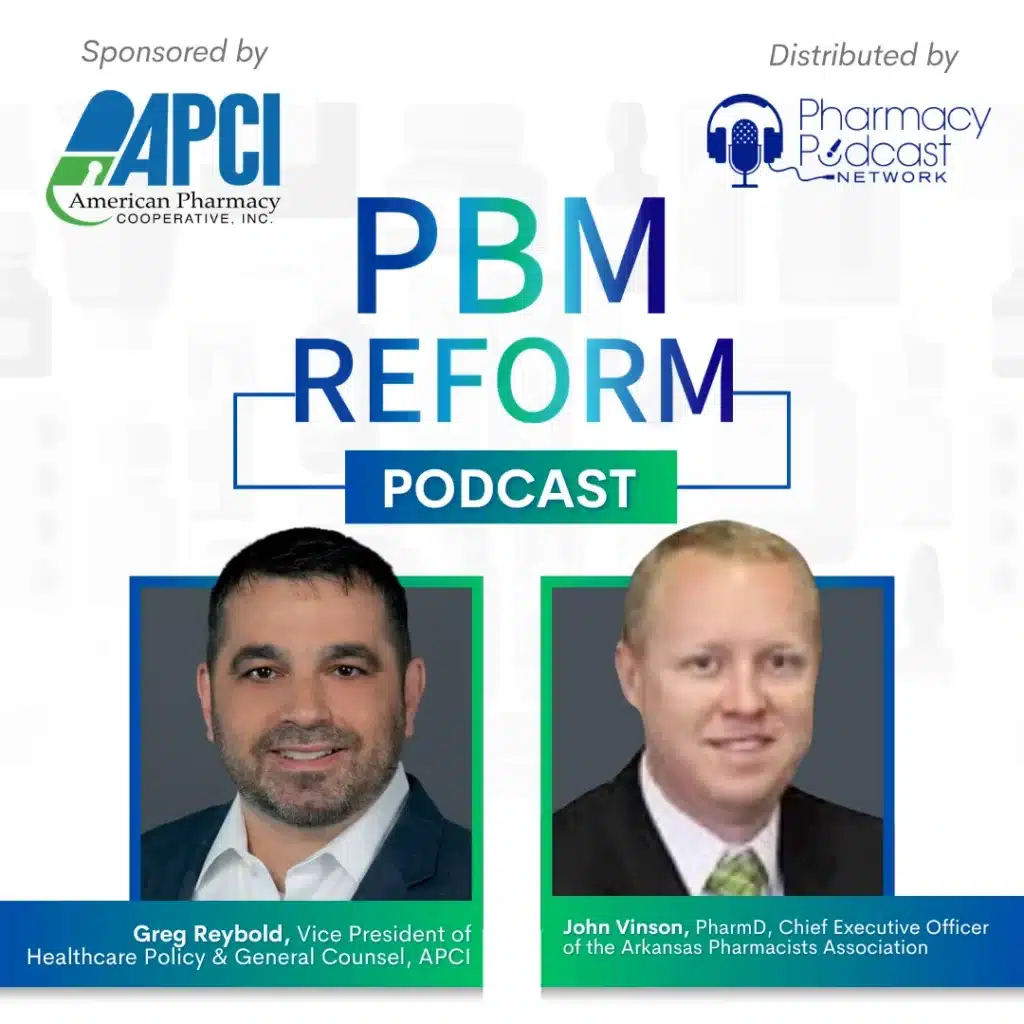
In the latest episode of the PBM Reform Podcast, Arkansas Pharmacists Association CEO John Vinson, PharmD, joins APCI Vice President of Healthcare Policy Greg Reybold to discuss changes to the TRICARE pharmacy benefit and what those changes have meant for military families, independent pharmacies, and rural communities.
TRICARE provides healthcare coverage to more than 9 million active-duty service members, military retirees, and family members. Express Scripts administers the program’s pharmacy benefit on behalf of the Department of Defense.
A Smaller TRICARE Pharmacy Network
A 2025 Government Accountability Office review found that the minimum number of pharmacies required in the TRICARE retail network was reduced from 50,000 to 35,000.
By the third quarter of 2024, the network averaged 42,550 pharmacies — 13,165 fewer than during the same period in 2022. GAO estimated that approximately 380,000 TRICARE beneficiaries may have needed to find another pharmacy after one they previously used left the network.
Independent pharmacies were hit particularly hard. According to GAO, nearly all of the pharmacies that left the TRICARE network during a major network change in October 2022 were independent pharmacies.
Reybold and Vinson discuss what those numbers mean beyond the statistics, particularly for military families in rural communities. In those cases, losing a pharmacy can mean traveling farther for prescriptions or losing a longstanding relationship with a healthcare provider who knows the patient and the community.
When Access and Choice Mean Different Things
The Defense Health Agency reported that 98% of beneficiaries remained within a 15-minute drive of a network pharmacy in 2024, meeting its standard for pharmacy proximity.
But proximity does not necessarily tell the whole story.
GAO found that some beneficiaries had to find new pharmacies or travel farther after the network changes. DHA officials characterized the issue as a reduction in beneficiaries’ choice of preferred pharmacies rather than a loss of access.
That distinction is an important part of the discussion.
A patient may technically have a network pharmacy nearby while losing access to the independent pharmacy that knows the patient’s medications, works with local physicians, and may have cared for the family for years.
In rural communities, where pharmacy options may already be limited, losing that choice can have an even greater impact.
Who Is Watching the PBM?
The episode also looks at how the Department of Defense evaluates the contractor administering the pharmacy benefit.
GAO found that DHA relied heavily on contractor-submitted reports to monitor beneficiary access and identified inaccuracies in some of that reporting. Although DHA’s oversight plans called for audits of the information, GAO found those audits had not been performed consistently.
GAO recommended stronger verification of contractor data and better oversight of beneficiary access. DHA has begun taking steps to strengthen its reporting and auditing requirements, but GAO’s recommendations remain open as of August 2026.
That raises a larger question that applies well beyond TRICARE:
When a PBM administers a pharmacy benefit, who is independently measuring whether that benefit actually works for patients and the plan paying for it?
That question echoes concerns Reybold raised during his recent Senate testimony on the TRICARE pharmacy program, where he called for an independent audit and stronger oversight of PBM performance.
Are Smaller Networks Really Saving Money?
TRICARE spent more than $8 billion on prescription medications in fiscal year 2023, making effective management of the pharmacy benefit important to taxpayers as well as military families.
A smaller pharmacy network may reduce costs for a health plan. But those savings need to be considered alongside what happens when patients are forced to change pharmacies, travel farther for prescriptions, or face new barriers to obtaining their medications.
Reybold and Vinson also discuss rising 2026 prescription copayments, specialty-drug delivery and monitoring, pressure toward mail-order pharmacy, and the effect PBM contracting decisions can have on independent pharmacies trying to remain in the TRICARE network.
Ultimately, the question is not simply whether a pharmacy network meets a numerical access standard.
It is whether the benefit provides meaningful access, reasonable patient choice, and real value for the military families it was created to serve.
Listen to the Podcast
Listen to John Vinson and Greg Reybold discuss the TRICARE pharmacy network, federal oversight of the benefit, the impact on independent and rural pharmacies, and why greater PBM transparency and accountability matter for military families.
Listen to the latest episode of the PBM Reform Podcast.
Learn more about APCI’s work on PBM reform and other issues affecting independent pharmacy on our Public Policy page. You can also watch highlights from Greg Reybold’s Senate testimony on the TRICARE pharmacy program.