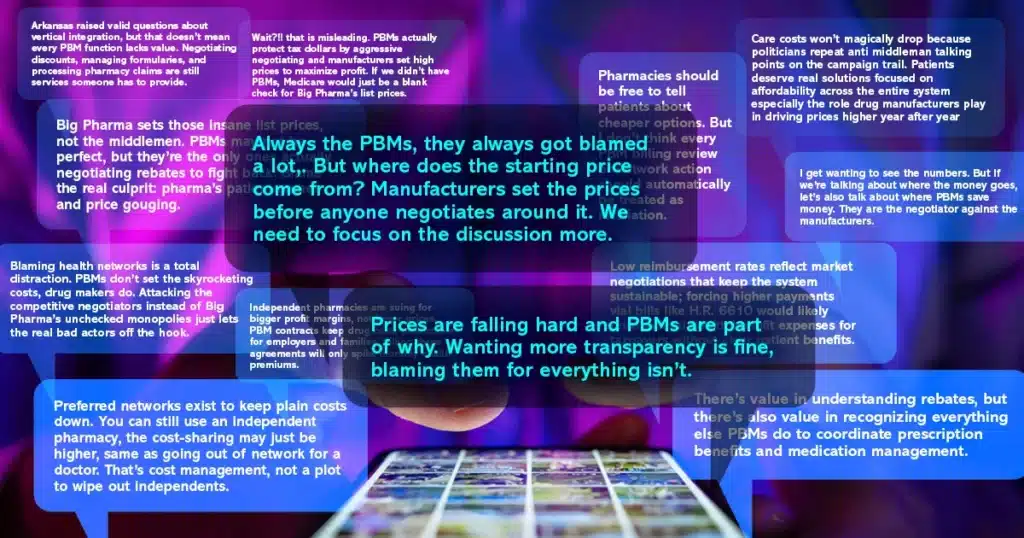
Something Changed in the Replies
For more than a decade, APCI has used its social media platforms to inform members, the independent pharmacy universe, and the public about developments in community pharmacy. PBM reform – and criticism of PBM practices – make up a significant percentage of those posts.
Most of the content APCI shares doesn’t get much reaction. We’ll get a decent number of likes and reposts on some things we share. Comments, for the most part, come from stakeholders in the independent pharmacy space, and they usually agree with the viewpoint we shared. Occasionally, there would be a disagreeing viewpoint, but these were few and far between.
Starting in the spring of 2026, something changed.
APCI’s posts began getting replies. In the beginning, they were rare; maybe one reply every other week or so, but they were there. And then they began to increase, to where now we’re seeing at least one reply every day.
Some of these comments come from accounts that appear only a single time. Others return again and again.
But they make similar arguments. Strikingly similar arguments. And most of the accounts we reviewed showed little or no visible history of discussing prescription drug policy, independent pharmacy, or pharmacy benefit managers.
As the Bard wrote, “something is rotten in the state of Denmark.” In this case, something seemed rotten in the state of social media comments on PBM practices. The pattern became noticeable enough that we began to document it.
APCI Started Keeping Track
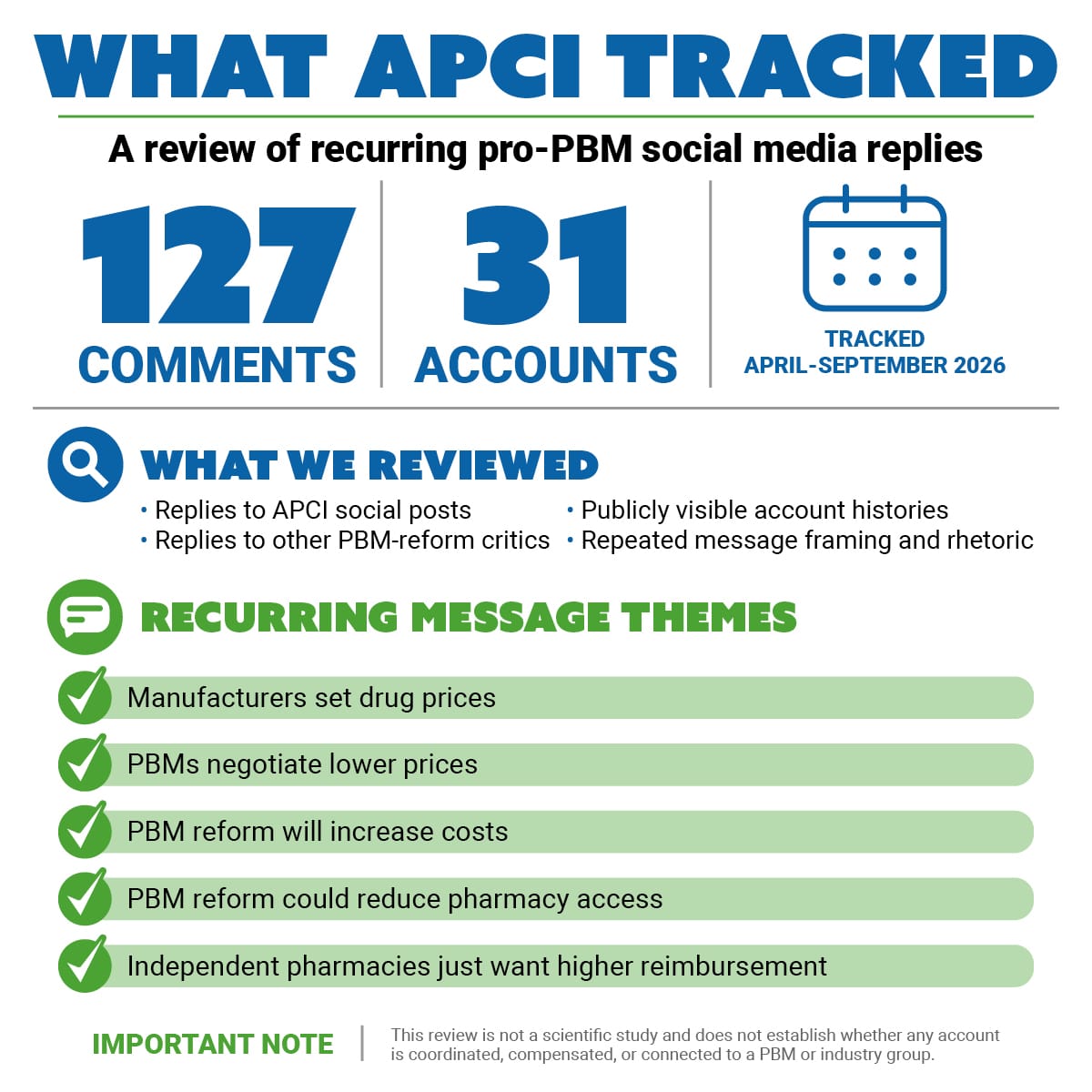
In mid-June, we created a spreadsheet to track these replies and began taking screenshots of the reply and the poster’s account. We went back to the earliest instances in which these accounts commented on APCI posts, from early April 2026, and started recording the following information:
- The commenter’s username
- The platform where the comment appeared
- The topic and date of the APCI post
- The content and date of the comment
- What made the comment unusual or noteworthy
- The message framing of the content
- The rhetorical tactic of the comment
As we dug into the comments, we found that some of the same accounts were also replying to other accounts critical of PBM practices or favoring PBM reform. So, we started tracking those comments, too. As of September 2, 2026, we have tallied 127 comments from 31 different social media accounts.
To be clear, this was not, and is not, a scientific study of social media behavior. The tracking method also does not determine whether any account we tracked is coordinated, compensated, or connected to a PBM or industry organization.
But it does reveal some intriguing similarities among both the comments and the accounts posting them.
Familiar Arguments, Unfamiliar Accounts
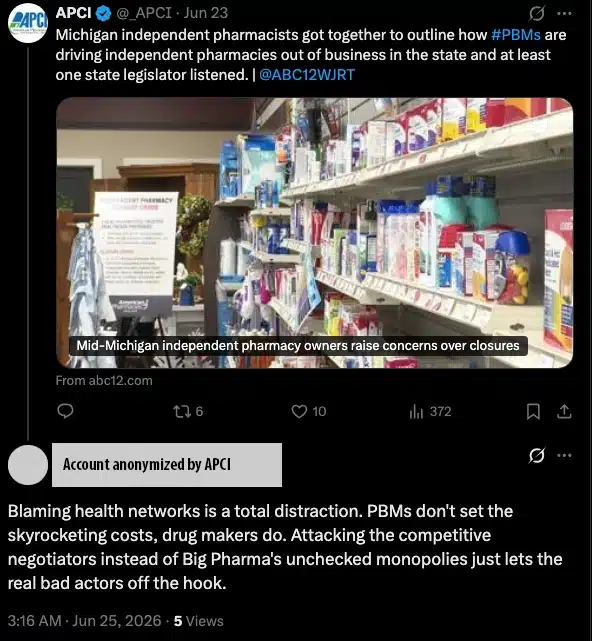
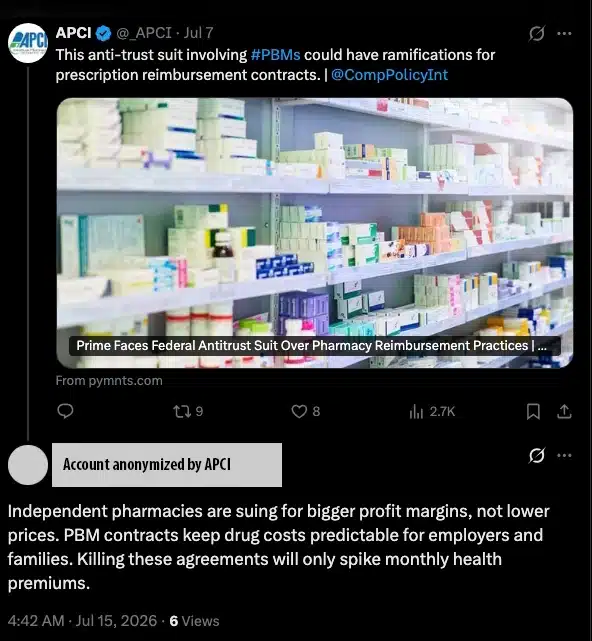
We have shared screenshots of representative replies documented by APCI. Account names, handles, and profile images have been anonymized for publication.
One of the clearest patterns we saw from our tracking was the repeated use of arguments we have heard from the PBM lobby over the years. It became an ongoing refrain:
- Manufacturers set drug prices
- PBMs negotiate lower prices
- PBM reform will increase costs
- PBM reform could reduce pharmacy access
- Independent pharmacies just want higher reimbursement
These arguments are not new. It was simply surprising to start hearing them so often, with such consistency – and from accounts that previously seemed to have absolutely no interest in healthcare, drug policy, or pharmacy.
What we did see were plenty of other interests. Photography. Travel. Lots of soccer and crypto enthusiasts, for some reason. What we saw little of was previous discussion or interest in pharmacy benefit managers. Yet once some of these accounts entered the PBM discussion, they returned repeatedly.
Again, none of this proves that anything improper is happening. Every day, people discover new interests, and social media algorithms often expose users to new subjects where they previously had no interest.
What makes this noteworthy, however, is the number of accounts making similar arguments within the same general time period, not that a single account developed a sudden interest in PBMs.
Are These Comments Coordinated?
The short answer is: We don’t know.
We have no evidence showing that the accounts are paid, that they are bots, that they are fake, that they were recruited by the PBM industry or an affiliated organization, or that they are working together.
What we’ve done at APCI is to document a pattern of behavior that is unusual in such a short period of time. The available evidence does not tell us what caused it.
Talking Points Match the Broader PBM Message
When looking at the replies APCI has been receiving, another pattern emerges: The arguments align consistently with established PBM industry positions.
The similarity becomes clearer when the replies are compared with the PBM industry’s own public messaging.
The Pharmaceutical Care Management Association, which represents PBMs, has repeatedly argued in 2026 that drug manufacturers are responsible for high prescription prices, that PBMs negotiate lower prices on behalf of employers, and that rebates and discounts reduce costs for patients and plan sponsors.
PCMA has also argued that some PBM reform proposals could increase costs for employers or reduce pharmacy access. In another example, PCMA characterized proposed pharmacy reimbursement legislation as a “taxpayer giveaway to pharmacists.”
Those are the same basic frames that repeatedly appear in the comments APCI has been tracking.
That doesn’t mean the commenters received their arguments from PCMA, or from anyone else. It does mean they are advancing recognizable industry positions.
Possible Explanations Abound
We’ve put forth a lot of information surrounding these comments, and there are reasonable explanations for why they are happening.
Organic participation is one possibility. The commenters may truly agree with PBM industry positions. Algorithms are another; APCI content may be appearing to viewers who are more likely to engage with our posts. Trade associations, businesses, or advocacy groups may be encouraging their supporters to participate in discussions about PBM issues. Some other form of organized amplification is also possible.
Our data cannot ultimately determine which explanation, or combination of explanations, accounts for what we’re seeing.
Why It Matters
APCI is getting pro-PBM replies on its social media posts. So what?
The significance goes beyond whether APCI agrees with the people leaving these comments. There is a communications effect in play. When a patient or pharmacy owner sees an APCI post and the replies repeatedly shift responsibility away from PBMs, it can create an appearance of widespread public consensus.
Whether a message spreads organically or through organized amplification, repeated arguments from apparently unrelated accounts can influence how a policy debate appears to the people watching it.
But the better question is whether the arguments are true.
And those arguments are worth examining on their own merits. APCI has addressed many of them in its support for the Pharmacists Fight Back Act, including questions about patient costs, pharmacy access, steering, and the role of rebates.
Who makes an argument may tell us something about how a message spreads. Whether the argument withstands scrutiny tells us whether anyone should believe it.
We’ll Keep Watching
We don’t know why APCI has suddenly attracted so many new social media experts on pharmacy benefit management.
Some may simply disagree with us. Some may have encountered the issue through an algorithm or another account. Some may be participating in organized advocacy.
What we do know is that many of the arguments appearing in our replies closely track messages the PBM industry itself uses publicly, and many are coming from accounts that previously showed little visible interest in pharmacy policy.
That does not prove coordination.
But it gives us a good reason to keep paying attention.