The Pharmacists Fight Back Act would reform pharmacy benefit manager practices within one federal health program. Its impact may not stop there.
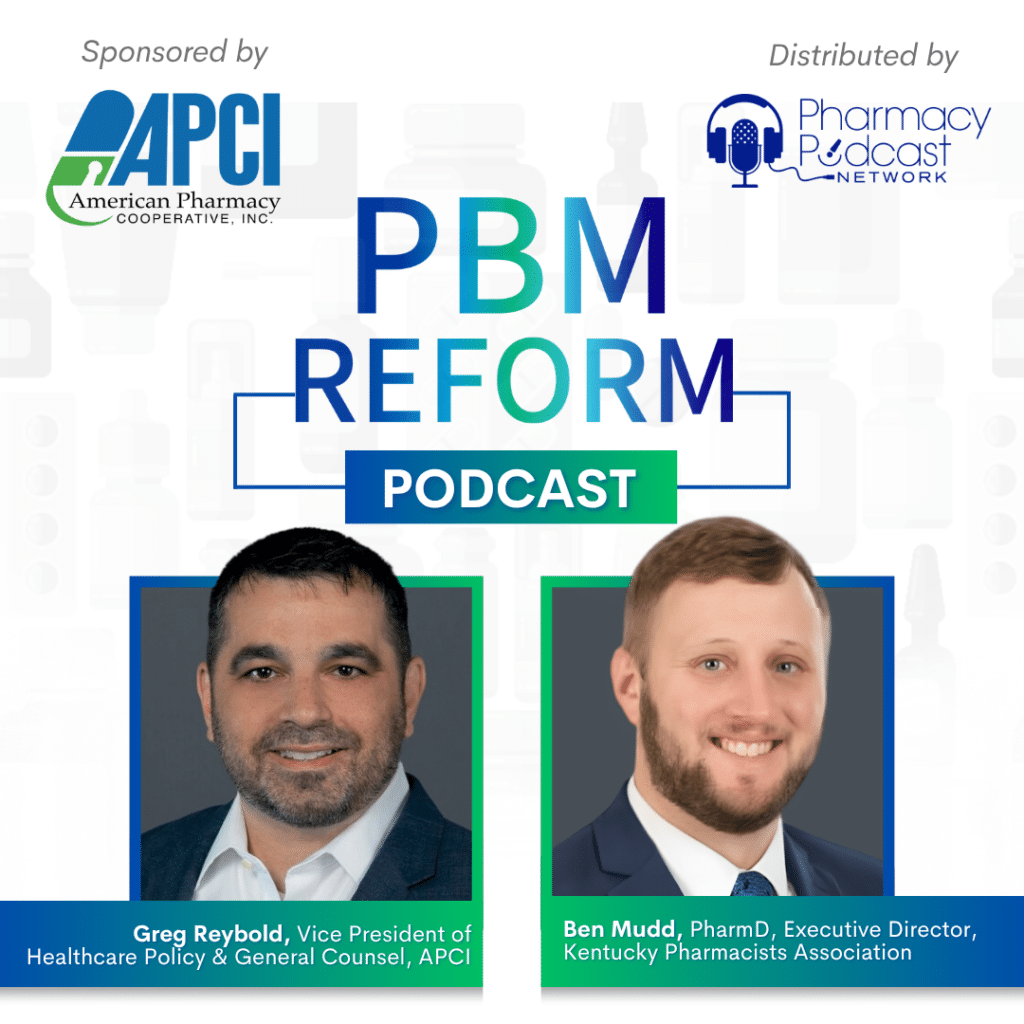
In the latest episode of the PBM Reform Podcast, APCI Vice President of Healthcare Policy Greg Reybold and Kentucky Pharmacists Association Executive Director Ben Mudd, PharmD, discuss how reform within the Federal Employees Health Benefits (FEHB) Program could influence PBM policy well beyond the federal workforce.
H.R. 6610 would establish new PBM transparency, contracting, and pharmacy reimbursement requirements within the FEHB Program. If those reforms work as intended, the program could provide lawmakers and health plan sponsors with something the PBM reform debate has often lacked: a working model.
A Federal Proving Ground for PBM Reform
The FEHB Program provides health coverage to millions of federal employees, retirees and family members. Its size gives policymakers an opportunity to evaluate PBM reforms on a meaningful scale.
Reybold and Mudd discuss how implementation of the Pharmacists Fight Back Act could show whether greater PBM accountability can improve transparency, preserve patient choice and provide more reasonable pharmacy reimbursement without disrupting access to care.
That matters because many of the arguments used against PBM reform are based on what opponents say might happen. The FEHB Program could give policymakers an opportunity to see what actually happens.
What Happens in FEHB May Not Stay in FEHB
The bill applies only to federal employee health plans. However, a successful rollout could influence how other healthcare purchasers approach their own PBM contracts.
Commercial health plans and employers could look to the FEHB requirements when negotiating future PBM contracts. State lawmakers may view the program as a blueprint for additional oversight, while Congress could use its results when considering reforms to other federal healthcare programs.
The bill is narrow by design. The implications may not be.
Growing Momentum in Congress
The podcast discussion follows the House Committee on Oversight and Government Reform’s 40–2 vote to advance the Pharmacists Fight Back Act.
That bipartisan vote moved H.R. 6610 one step closer to consideration by the full House. It also reflected growing bipartisan agreement that the current system is not working for patients, plan sponsors or community pharmacies.
Passing legislation is only one part of the process. How the reforms are implemented, enforced, and measured will determine whether the FEHB Program becomes a model for broader change or another example of PBMs adapting around new requirements.
Listen to the Podcast
Reybold and Mudd discuss the committee vote, what the Pharmacists Fight Back Act would change and why the legislation could have consequences far beyond the Federal Employees Health Benefits Program.
Listen to the latest episode of the PBM Reform Podcast.
Learn more about APCI’s work on PBM reform and other issues affecting independent pharmacy on our Public Policy page.